

A Beginner’s Guide to Oracle Cards: How to Read, Use, and Connect With Your First Deck
Sooo…you finally bought your first oracle deck. Maybe you were drawn in by the artwork, maybe it was a gift, or maybe you just had this gut feeling that you needed it. And now you’re sitting there staring at a box of cards wondering, “Okay…what do I actually do with these?”
Are you supposed to know some secret code?
Do you need to be psychic to make sense of it?
To answer the questions above: No, no you don’t
Oracle decks are actually one of the most beginner-friendly spiritual tools you can have. They’re used to telling you your fate and predicting the future. They’re more like a mirror reflecting your thoughts, your feelings, your patterns, and guiding you toward clarity and alignment.
What Exactly Are Oracle Cards?

Think of oracle cards as tools for self-reflection. Each deck comes with its own theme: angels, animals, trees, chakras, goddesses, you name it! Unlike tarot, which follows a set 78-card structure with its own rules and symbolism, oracle decks are diverse in their meanings and often light in their delivery. Some have 30 cards, others 60 or more. The messages might be simple phrases, affirmations, or questions meant to spark reflection.
The main thing to remember is that oracle decks are about connecting with your intuition and not memorizing some strict system. That’s why they’re so approachable. You don’t need to be “spiritual enough” or “trained” to use them. If you’re holding the deck, you’re already intuitive enough.
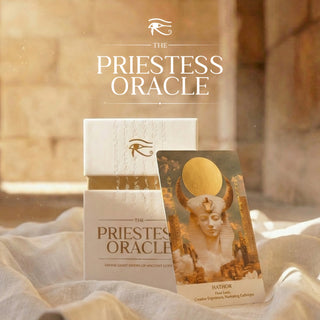
Some decks lean especially well into this inner-listening quality. The Priestess Oracle, for example, was created as a companion for reflection rather than instruction—something you sit with, not something you rush to interpret. And honestly, that’s the energy most oracle decks are inviting you into anyway.
Prepping Your Deck (Cleansing, Charging, and Getting to Know It)
Here’s where beginners often get tripped up: Do I need a ritual? Do I have to sage the cards? What if I do it wrong?
Relax. You can make it as simple or elaborate as you want. Personally, when I get a new deck, I like to do a little reset. Just something to clear any lingering energy from the factory or shop. A few ways to cleanse:
- Waft incense or herbal smoke over the cards.
- Leave them under the moonlight.
- Place a crystal (like selenite or quartz) on top of the deck.
- Or, honestly, just shuffle them with intention.
Once your cards are clear, “charge” them with your own energy. Some people sleep with their deck under their pillow. Others just handle the cards often. The more you use them, the more they feel like yours.
And here’s a fun practice: interview your deck. Pull cards to answer questions like, What’s your purpose? How will you help me grow? What’s your personality? It sounds quirky, but it helps you build a relationship with your cards.
Okay, But How Do I Read Them?

This is the big question, right? The good news is there’s no one right way. Here are a few beginner-friendly methods to try:
1. The One-Card Pull
Shuffle, ask a simple question like “What do I need to know today?”, and draw a single card. Sit with the image, the words, the colors. Notice your first impression before your logical mind jumps in. That first spark is usually your intuition talking.
2. The Two-Card Spread
Ask: What do I need to release? What should I focus on moving forward? One card will show what’s leaving your life, the other what’s coming in. It’s a simple way to get clarity when you’re in transition.
3. The Three-Card Spread
A classic beginner layout. Pull one card for the main message, one for what to release, and one for what to focus on. It gives a well-rounded snapshot without overwhelming you.
Tip: Don’t pull too many cards at once. Beginners often want to keep shuffling until they get the “right” answer. But if you’re doing multiple readings a day on the same thing, you’ll just muddy the message.
Ask Better Questions, Get Better Answers
This one’s important. Oracle cards respond best to open-ended questions that invite reflection. Instead of asking, “Will I get this job?” try “How can I best prepare to land this job?” Instead of, “Is my relationship going to end?” try “What do I need to understand about this relationship?”
Notice how the second version puts the power back in your hands? The cards become a tool for empowerment, not dependency.
This is something I notice especially when working with reflective decks like The Priestess Oracle. The cards ask you to slow down, to feel, to notice what’s already present beneath the surface, it helps you channel and remember…you.
Intuition First, Guidebook Second
Every deck comes with a guidebook, and those can be super helpful. But don’t treat it like the only answer. If the card imagery reminds you of your grandmother’s advice, or a particular season, or even your pet… that association matters. Your intuition often speaks louder than the printed words.
I remember once pulling a card with a wolf on it. The guidebook talked about loyalty, but all I could think of was a tough season in my life where I had to learn independence. That meaning resonated way more than the official one. Trust those moments.
Making It a Ritual
If you want, create a little practice around your readings:
- Ground yourself with a few breaths.
- Light a candle or put on soft music.
- Journal about your pull, sometimes writing makes the message clearer.
- Keep the card visible (on your desk, altar, or nightstand) to revisit during the day.
Personally, I love pulling a card in the morning and journaling for 10 minutes about what it means for me that day. At night, I’ll revisit it and notice how the message unfolded. Some people keep the card under their water glass or tucked in a planner. There’s no wrong way! Do what makes it feel meaningful.
Decks that emphasize slowness and embodiment, again, The Priestess Oracle is a beautiful example! With its divine light codes, it really shines in these kinds of gentle, ongoing rituals.
Reading for Yourself vs. Reading for Others

You can absolutely read for yourself, and most people do. But if you read for others, remember:
- Cleanse your deck before and after.
- Ask questions that are centered on them (not third parties).
- You shuffle; they can cut the deck if you want.
Above all, keep the reading focused on guidance for their highest good, not fixed predictions.
Common Beginner Worries
- “What if nothing comes up?” Sometimes the meaning won’t hit right away. Let it linger. There will be times that the card makes sense hours or even weeks later.
- “What if I pull something uncomfortable?” That happens. Cards don’t always tell you what you want to hear, but often what you need to hear. Lean into the discomfort. It might point to what’s really blocking you.
- “Do I need to only have one deck?” Nope. Many readers collect multiple decks and use different ones depending on their mood or the season.
Buying your first oracle deck is the beginning of a relationship with the cards, but mostly with yourself. These cards are mirrors, companions, sometimes cheerleaders, and…well, sometimes they can be tough love. They don’t have to be mystical or complicated unless you want them to be.
So if you’ve been staring at that new deck on your shelf, waiting for the “right” time to start, maybe this is your sign. Shuffle, ask a question, pull a card. And then, just listen.